|
|||||||||||||||||||
![]() |
|||||||||||||||||||
|
|||||||||||||||||||
|
|||||||||||||||||||
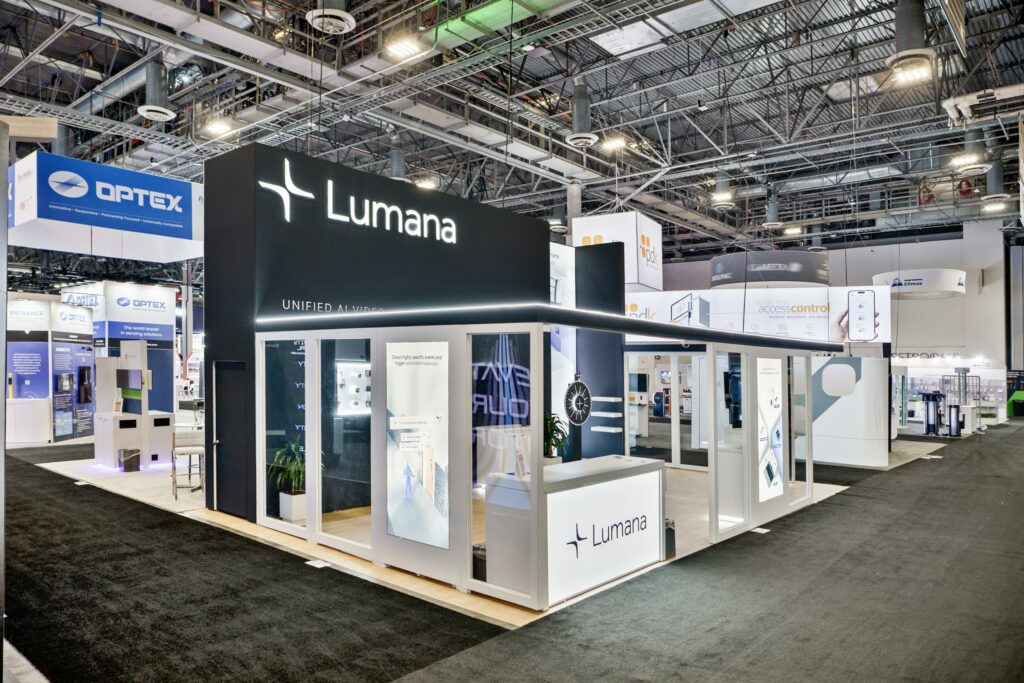
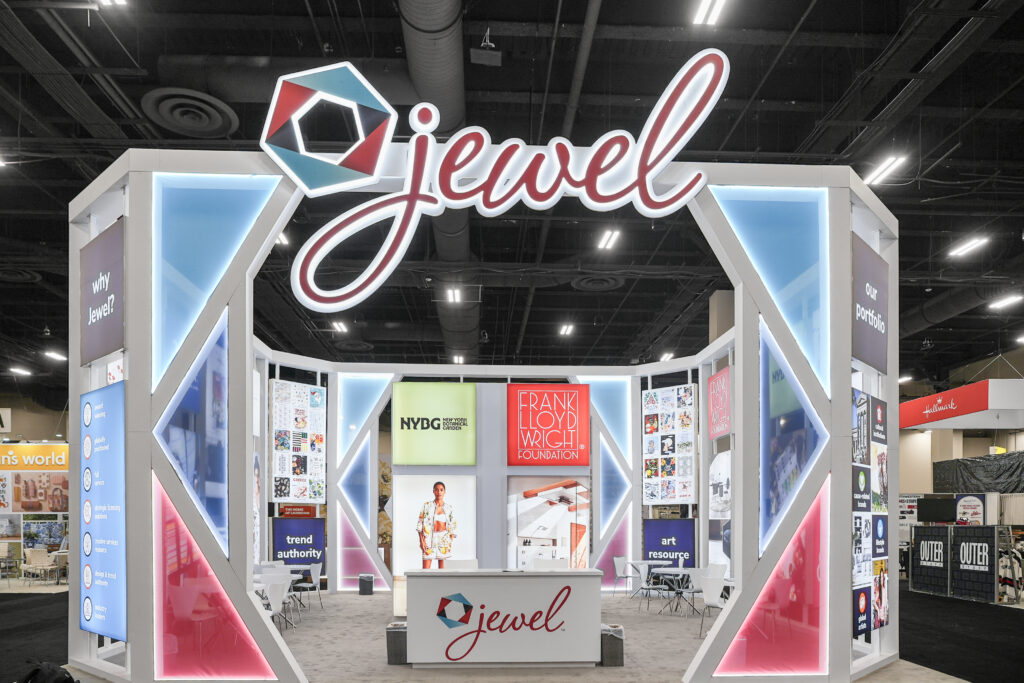
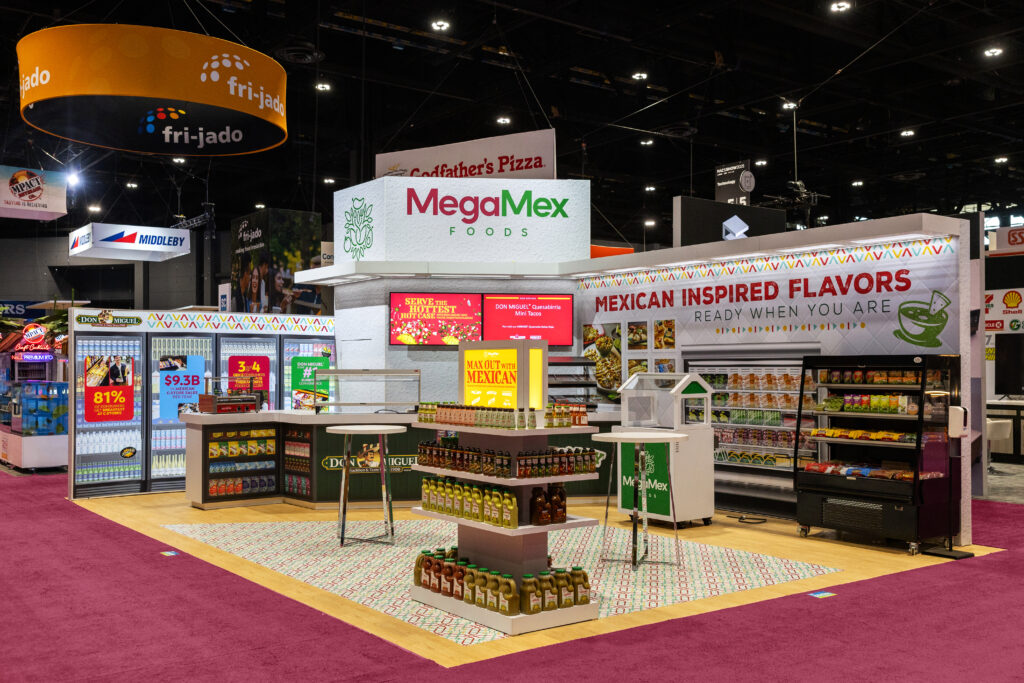
Lighting is the absolute key to getting attention on the show floor. Nothing matters more. If you are in a 50’x50’ space or a 10’x10’ space there is only one guarantee – no lights, no attention. Today we are talking about your entire floor space – not the elements within your exhibit; another subject for another time. Having attended the World Shoe Association show in Las Vegas recently, with its many huge booths, the point was underlined even more so. There were so many large booths that size really did not matter, the only thing that brought your eye to an exhibit was lighting.
For a long time, lighting seemed to be the item that was eliminated from a proposed exhibit budget to keep the project within the overall show’s financial plan. This trend is changing as exhibitors realize that good lighting is one of the best techniques to draw attention to their product and key messages. Exhibit lighting is more than the mechanics of selecting and positioning light fixtures. It’s the art of revealing the essence of displays, so the viewer appreciates their attractiveness and value and in turn wants to visit that space.
There was an overabundance of hanging signs at the WSA. Since most of the exhibitors had relatively large budgets and there were so many double deck exhibits that blocked sightlines – the overhead signage really was essential to lead clients to booth spaces. However, again, lighting was key. With so many hanging signs, those that were not lighted seemed to blend into the ceiling. A few strategic lights ordered from show services, along with rigging, will make a sign “pop” right out of the dark ceiling.
And what about the smaller WSA exhibits? This was quite interesting since most of the larger exhibits were completely enclosed – the smaller exhibits had a fighting chance. By displaying products in well lighted exhibits the eyes of perspective clients could be caught. Again, lighting was key – a dark, unlighted display blended into the venue walls. Smaller exhibitors with well thought out product display were equally busy to the “big guys.”
Hotel rooms are definitely at a premium for megashows. Some companies block hotel rooms years in advance. The later you book hotel rooms, the more expensive and farther away from the show you’ll be.
Leave international shipping to the experts. Your best bet is to work closely with one of the official freight forwarders listed in the show manual. Make copious lists of the contents of every crate or box you’re shipping, noting the dimensions and weights (usually in kilos) of each. Then be ready to complete a lot of paperwork, including commercial invoices, bond guarantees, etc.
Pick up and read a country-specific guidebook. The pocket-sized guides are the easiest to carry around with you at all times.
When in doubt, dress up. The dress code outside the states is much more formal than at similar shows held in the United States. You don’t see many company logos on T-shirts or theme outfits. Business attire is normally the dress of the day.
BYOB. That is, bring your own badges. Many foreign shows do not provide badges - for booth staffers or attendees. As an aid to booth visitors, print tiny country flags on staff badges to indicate which languages the staffer speaks.
Expect to see exhibits built on the show floor. Shows aren’t held “back to back” in Europe, as they are in the United States, so there is time to actually construct exhibits from the ground up on site. Exhibits, which are called “stands” in Europe, are generally built on small risers, elevating the entire structure by a couple of inches. Electrical wiring and plumbing are tucked under the risers.
Expect booth carpenters in Germany to take “beer breaks.” This is “culturally correct.” You will be viewed as an “ugly American” if you make an issue of it.
There are no I&D unions. Skilled I&D labor is usually provided by your exhibit house. Drayage is also less structured and regulated, and it is usually handled by the official contractor.
Electrical requirements are different. Don’t forget to analyze your power needs for the show, and ship your power transformers and plug adapters. They’re difficult to buy once you are out of the states. (Do not try to rip one of the prongs off a U.S. electrical plug. This has been tried and is definitely not recommended unless you want to fry your equipment.)
Buy extra carpet padding. Floor covering in the stand varies from finished hardwood risers and painted floors to the standard carpet provided by show management, which is more like a felt indoor/outdoor carpet by U.S. standards.
Food and beverage service is expected.
Be prepared to pay VAT. If you’re not familiar with the Value-Added Tax, many countries levy a tax on all goods and services purchased there. These taxes are fully refundable; however you are required to submit the original bills along with several complicated forms, then wait to receive your refund. One alternative is to have all expenses from international shows routed through one designated person in your accounting department, who will accumulate the original copies of bills for filing after the show. However, this person will probably never speak to you again and lose all subsequent expense reports you turn in.
Virtually all exhibitors at trade shows budget time for surveying their competitor’s merchandise and latest offerings. Is there a better forum for competitive analysis? Trade shows offer us the chance to come face to face with our competitors, learn of their plans, and uncover information that may not make it onto their web sites and into their brochures. To make the most of this opportunity, a Trade Show game plan is essential.
Before the show obtain the show floor plan and exhibitor list. This will give you an idea as to which of your competitors will be promoting itself and who is an event sponsor. How they are sponsoring may give you some insight into how they are performing. For instance, if a competitor that has rented a 10’x10’ booth has now booked a much larger booth space or is listed as a Gold level sponsor, that tells you something about its performance. Before the show determine your plan of action, establish the questions you want answered and ensure that at least one of your team is responsible for picking up the competitors’ promotional materials. Divide the floor plan into areas of responsibility so that you will not be stumbling over each other on the floor.
At the show single out one team member as the point person - the information collector. Obviously, you cannot go up to a competitor’s booth, hide your name tag and start asking questions. Most companies are very aware that they have competitors out there trying to collect information. However, it is a fact of nature that everyone talks more than we should. Approaching a company rep in a friendly manner and identifying with him or her as fellow professionals is often a useful tactic. People like to talk to their peers, those we can relate to and with whom we can share experiences. Potential customers, suppliers and non-competitor firms also have their ears to the ground, and also talk to your competitors. A competitor may reveal more to a potential client than to you, which makes a client a valuable source of information.
For your report -don’t forget the obvious. What size booths do your competitors have; how well are they designed; who is their booth staff; what collateral materials and gifts are they handing out; which company seem to be receiving the most traffic and why? Such information can assist your own company’s marketing efforts, and is also useful for measuring your show performance with others.
After the event it is important to combine what you have collected and deliver it as quickly as possible to those who can use it. Don’t let this important step wait: old intelligence may be interesting, but it is of little value.
Going to trade shows allows us to get “up close and personal” with those we are observing on a daily basis. With some simple preparation, attending a trade show with a clear action plan can produce more valuable information than is found in a tote bag full of pamphlets and free pens. In addition to promoting your company, you can walk away from the show with a better understanding of your competition.
Here is a classic gimmick to get visitors to your booth - and you can target your pre-selected clients, rather than hand out 1,000’s of ineffective, inexpensive throwaway promotions. Devise a two-part promotion: Send out half of a prize in the initial announcement ( in this case it was the tin that holds the Swiss army knife) and reward the clients on your mailing list with the second half of their prize when they stop in at your booth. It’s a classic promotional gimmick — and it works. Other ideas - one company sent out a work glove - the left hand - and told the invitee that to receive the mate - the right hand - they needed to stop by their booth and pick it up. A scratch-off game ticket fits easily into an invitation envelope - invitees must bring it by the booth to see what prize they won.
Exhibit graphics are one of the main elements in drawing show attendees to your booth. Your graphic text should be brief and succinct. Tell what your company does and invite the potential client to step inside. You should never need more than six bullet points to accomplish that. Attendees do not have all day to read innumerable bullet points - the more type you have the less likely that they will even start to read your text. Keep it simple. Limit your text. Use upper and lower case type. Don’t layer type over a too-busy background. Use language for the layman. Always keep your goal in mind - getting show attendees to stop, receive your message, and step inside for more information.
Where does the union fit into the show floor picture and who is making the rules? What do you really understand about the different people behind the show at which you are exhibiting? First there is show management – in most cases the association that is directing the show. Then there is the official service contractor that provides services and a labor force to get the exhibits built on the show floor – think GES, Freeman, and many smaller companies. Then there are the EAC’s – exhibitor appointed contractors – that have been hired by the exhibitor outside of the show contractor. It has been our experience as an EAC that many exhibitors on the show floor feel that they must work with the onsite show contractor. This is not true.
However, if you are going to a union-contracted venue then you must use a company that has a union contract. Additionally certain things like electrical services, drayage costs, and specific union jobs such as the electrical labor must be purchased by your company or through your exhibit house from the official contractor. In different cities, even in different venues within a city, there are different rules. As the exhibitor it is your job to contract with a knowledgeable company that abides by the union contract in place – or in the end you will pay through the proverbial nose!
It is very important as the exhibitor that you have shopped and compared. Do you know the local union’s rates and how those rates compare to those quoted by the show contractor and your EAC? What exactly may exhibitors do for themselves, according to union rules? Is there a floor-dispute resolution process in place?
How does it work? Mandatory crew size issues can’t be ignored. You may think it’s a two-man job, but the union work rules, because of OSHA concerns or contract clauses, may say three are mandatory. Remember you are at the mercy of many people at your show – learn your rules early and carry your manual – the most reliable person you have is yourself!
Did you know that there is a difference between ordering your electrical power at the show and having it installed? You must read every one of your show forms. In many cities, mostly in the southern USA – when you buy a unit of electricity it is installed at your exhibit without additional charges. However, in most of the big convention cities including Las Vegas, San Francisco, Chicago and New York – there is an additional fee for electrical labor and depending upon the day and time you schedule your electrical labor it can be quite expensive. Your exhibit house should be able to help you with these forms – they work around this everyday and usually can make the most qualified analysis of your electrical needs.
We cannot stress this subject enough- if you do not read your exhibitor’s manual you will spend extra time, extra money, and needless hours of frustration on the show floor. If you are working with an exhibit house and they will not help you with your exhibitor’s manual - you are working with the wrong house. On the other hand - when your exhibit house asks you for a copy of the manual, or your password to read it online and you are not willing to share that information - then you are at fault. It is that simple!
Welcome to our blog! Absolute Exhibits is an exhibit service provider, as well as an exhibit house with offices in Orange County, California and Las Vegas. We have been in the tradeshow industry for 12 years and know quite a bit about working a trade show. As in any industry, we have seen shows evolve from mere mortals to giants and sometimes disappear. But there are always certainties about working on a tradeshow floor, or picking the right show to go to, or getting the most out of your investment and we are here to share our knowledge with you – so join us, read us, and please comment!